You are viewing 1 of your 1 free articles
Black-led households are over 12 times more likely to be in temporary accommodation (TA) than their white counterparts, with structural racism believed to be a factor in longer stays, a senior researcher at Shelter has told MPs.
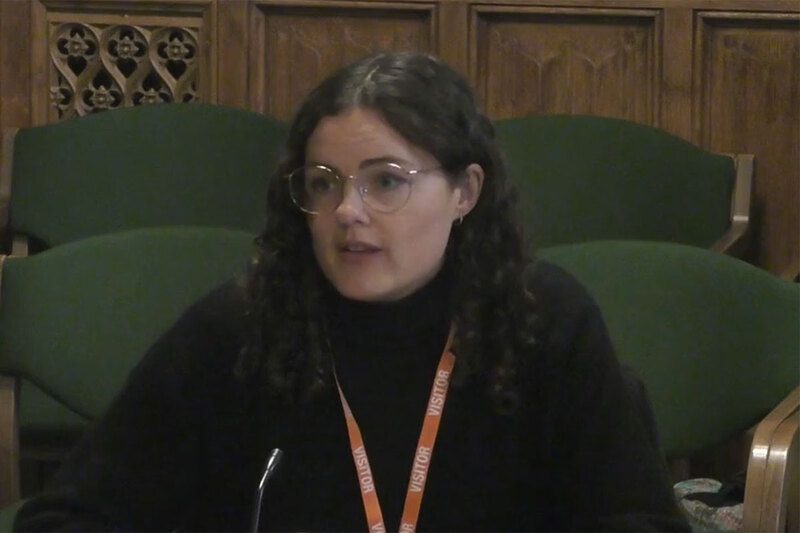
The Commons’ Women and Equalities Committee held its first evidence session on its inquiry into Black homelessness last week.
The inquiry will examine why and how Black people face disproportionate risks of homelessness and what measures the government should include to address this in its long-awaited homelessness strategy.
Martha Schofield, senior research officer at Shelter, said during the session: “Many black-led households are disproportionately stuck in temporary accommodation.
“Black-led households are over 12 times more likely to be in temporary accommodation compared to white households.
“They are also staying there longer: black-led households are more than twice as likely to have been stuck in TA for over five years compared to white-led households.”
It comes after a major study by Shelter published in July found that Black families experiencing homelessness were half as likely to get a social home compared to white families.
Ms Schofield explained that while they “cannot say for certain” why Black residents face longer stays in TA, they believe “a number of systemic factors” all play a role, including a lack of social housing and failures in the housing benefit system.
She added: “Structural racism, as our research showed, is really important for us to be considering in this context, and we believe it is leading to people being stuck in temporary accommodation for longer.
“That ties in with the racism and the derogatory stereotypes that people have, the excessive questioning and a sense of being blamed for being in that situation, or that your case is being de-prioritised by the people you are going to for support.”
Ms Schofield had earlier told members of the committee that the charity’s research into accessing social housing found anti-Black racism was “a theme that we heard time and time again”.
Jasmine Basran, head of policy and campaigns at Crisis, said their research had brought up similar issues. She also highlighted the impact of specific policies which target ethnic minority groups, such as ‘right to rent’ checks for private landlords.
She said: “In our own research and experience with supporting people, we find that experiences of racial abuse exacerbate those more systemic drivers of homelessness.
“People we have been supporting, and what we found in our research around race and homelessness, have really highlighted the prevalence of... racial discrimination from services that are meant to support [people].”
Ms Basran later added that Black women in particular reported being stereotyped, and that this held them back from speaking up.
“They were labelled as aggressive and support was withdrawn from them, so they very much felt like they were being treated as a stereotype rather than as a person,” she said.
Uche Eneke, a peer researcher at Shelter, told the committee about her own experience of overcrowding in a one-bedroom flat with her two sons.
She told MPs about problems from mould, a lack of space and a giant crack in the wall, which she resorted to covering with an old mirror to keep out the cold after being told the disrepair could not be fixed unless the whole wall collapsed.
Asked if the situation was made worse because she was from an ethnic minority, Ms Eneke said: “It actually was, because I used to question myself.
“I used to ask, ‘Is it because I’m Black?’ And then I would question, ‘Is it because I’m a single mum?’ Or, ‘Is it because I’m African? Is it because of my name? Why am I not getting the help?’”
Ms Eneke gave several examples to MPs of times she had needed to code switch, meaning to present an image of whiteness through language and clothing.
“My telephone name used to be Jillian, [because] I find that when I say, ‘This is Jillian,’ I get put through a lot quicker than when I use my very African name,” she said.
Ms Schofield reminded MPs that Shelter is campaigning for anti-racism to be its own module in the upcoming competence and conduct standard for social housing staff, which is due to come into force in October next year.
As of July, more than 130,000 homeless households in England were living in temporary accommodation, including nearly 160,000 children – the highest number since records began.
The crisis has also seen a rise in English councils’ spending on this type of housing, which reached £2.8bn per year in September and has sparked warnings of a £3bn funding gap by the end of the decade.
A Ministry of Housing, Communities and Local Government spokesperson said: “Racism in our housing system is illegal, and we urge anyone who has suffered from discrimination to report it so we can put an end to this disgraceful behaviour.
“We are taking urgent action to fix the housing crisis we inherited so people do not need to access these services in the first place, including providing £1bn for crucial homelessness services this year.
“We will set out further action to tackle these issues in our homelessness strategy, which we will publish later this year.”
But Mushtaq Khan, chief executive of the Housing Diversity Network, said more action is needed in the sector to tackle racial inequalities, and called for a separate regulatory consumer standard on equality and diversity.
He told Inside Housing: “The persistent overrepresentation of Black and minority ethnic households in homelessness and temporary accommodation is not a statistical anomaly, but evidence of systemic racism embedded within the housing and homelessness systems.
“The research has highlighted far higher rates of overcrowding, longer time in temporary accommodation and a disturbing contrast in levels of homeless acceptances between different groups. These findings lay bare the deeply structural – not incidental – nature of racial inequality in access to housing and support.
“They demonstrate that homelessness for many in minority communities is not a random social misfortune, but the outcome of sustained, systemic disadvantage.
“To address this disproportionality, I think that the housing sector must commit to tackling racial inequalities as a central theme in homelessness prevention and social housing provision.
“I’d also actually go further than the recommendations of the research, and would like to see a separate regulatory consumer standard on equality and diversity to really focus the minds of social landlords.”
Sign up to Inside Housing’s Homelessness newsletter, a fortnightly round-up of the key news and insight for stories on homelessness and rough sleeping.
Click here to register and receive the Homelessness newsletter straight to your inbox.
And subscribe to Inside Housing by clicking here.
Already have an account? Click here to manage your newsletters.
Related stories