Sector welcomes drop in London rough sleeping figures but raises alarm over children in TA
The government’s latest homelessness figures have revealed a drop in rough sleeping, but the number of children in temporary accommodation (TA) has reached another record high.


 Sector welcomes drop in London rough sleeping figures but raises alarm over children in TA #UKhousing
There were 176,130 children living in temporary accommodation as of the end of 2025, which is the 12th consecutive record high and up 6% compared to the previous year.
Sector bodies have welcomed the ban on Section 21 evictions which has come into force today (1 May) under the Renters’ Rights Act, but called for action to ensure people can move on from temporary accommodation into affordable homes.
New data on rough sleeping in London, published yesterday, also revealed that 3,944 people were recorded as sleeping rough between January and March this year.
This represents a drop of 11% compared to the previous year, and is the largest percentage cut in rough sleeping since 2018 in a year unaffected by Covid.
Read More



The figures, published by the Combined Homelessness and Information Network (CHAIN), showed that 1,762 people were recorded as sleeping rough for the first time, which is 15% lower than last year.
Data from the Ministry of Housing, Communities and Local Government (MHCLG) on statutory homelessness for the period between October and December 2025 showed that 84,250 households had an initial assessment, which is down 1.3% on the previous year.
There were 16,290 households accepted as being owed a main homelessness duty, down 11.3% on the same period in 2024.
MHCLG said the fall in the number of households owed duties indicates that fewer households are approaching their council and receiving support.
There were 134,210 households in temporary accommodation as of 31 December 2025, which is an increase of 5% on the previous year, but down 0.4% from the record levels in the previous quarter.
“While this shift is small, this is the first quarter that the number of households in temporary accommodation has fallen since 2022,” MHCLG said.
In response, Stephanie Morphew, policy lead at the Chartered Institute of Housing, said: “As rights strengthen in the private rented sector and prevention activities at councils strengthen, a plateau in new duties owed might be on the horizon.
“This is welcome, but without an at-scale plan to decant households from temporary accommodation to stable, affordable housing, we risk parking households in expensive and unsuitable temporary accommodation.”
Ms Morphew said that restoring Local Housing Allowance rates in the short term is the “single most effective lever” to transition households from temporary accommodation into a stable home.
“In the long term, we look forward to the government’s long-term housing strategy delivering a vision for a housing sector that works for us all,” she added.
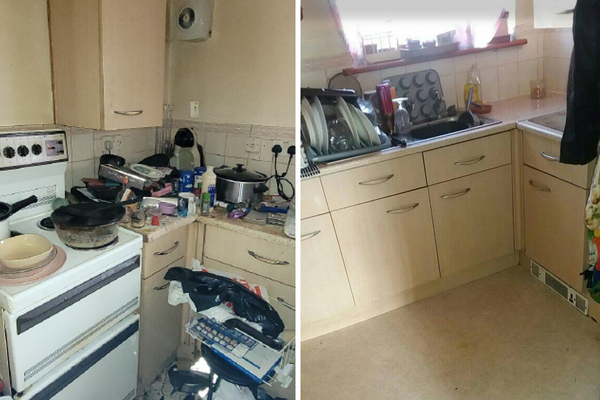
John Glenton, chief care and support officer at Riverside, said that the thousands of children living in temporary accommodation will be “sharing beds in cramped, poor-quality housing and living without kitchen facilities, so they can’t have a home-cooked meal”.
He said the government’s Value for Money review is “an opportunity to reset homelessness funding” so that more money goes towards prevention and supported housing.
“Supported housing providers can then work together with councils to uncover the level of need in each local area, so we get to grips with the massive scale of the homelessness crisis and end the needless cycle of TA,” he said.
Mr Glenton also said that it is “heartening to see the largest percentage reduction in the number of people sleeping rough in London for eight years in a year unaffected by Covid”.
“We remain hopeful that the mayor of London’s ongoing efforts to eliminate rough sleeping by 2030 will see the number of people sleeping rough in London continue to fall during 2026,” he added.
Matt Downie, chief executive of Crisis, said: “Once again, official statistics have reinforced what we are seeing with our own eyes: more and more families with children stuck in temporary accommodation.”
He said the government must build on the Renters’ Rights Act by taking “urgent action to make sure everyone can access a genuinely affordable home”.
Mr Downie continued: “We are very pleased to see the fall in rough sleeping figures in London, and now need to build on this success by tackling pressures in temporary accommodation.
“The single biggest intervention the Westminster government could do right now to prevent rising homelessness across the board is to unfreeze housing benefit.”
Responding to MHCLG’s figures, Lord Bird, founder of The Big Issue, said the government’s investment in homelessness is “beginning to turn the tide”.
He said: “While it’s good to see numbers starting to fall, we must be wary of becoming over-reliant on the sticking plaster solution of temporary accommodation.
“Our councils are spending up to 60% of their so-called homelessness prevention grants on temporary accommodation. I fear ‘homelessness prevention’ is becoming a buzzword, a false promise by politicians with no new ideas.”
Rick Henderson, chief executive at the membership body for front-facing homelessness services, Homeless Link, said the government needs to put its National Plan to End Homelessness into action.
He said: “The Treasury’s upcoming Value for Money review is a golden opportunity to deliver fundamental change for the homelessness system, shifting to a sustainable model rooted in prevention and long-term support.
“It is crucial that the review is grounded in evidence of what works to end homelessness and not used as a cost-cutting exercise, with the homelessness and housing sectors given a seat at the table to capture their expertise.”
Of the new London rough sleeping figures, Mr Henderson said the “significant fall” in the number of people forced to sleep on the streets is likely down to the impact of the mayor’s plan of action and the “efforts of exemplary local services”.
He added: “However, numbers of people sleeping rough remain extremely high. Years of stagnant funding and real-term cuts have pushed vital homelessness services to breaking point.”
Sign up to Inside Housing’s Homelessness newsletter
Sign up to Inside Housing’s Homelessness newsletter, a fortnightly round-up of the key news and insight for stories on homelessness and rough sleeping.
Already have an account? Click here to manage your newsletters.
Sign up for Housing 2026
Join us at Housing 2026 and hear from the sector’s most influential voices. Leading housing organisations curate their stages, showcasing the speakers and discussions that matter most.
Take part in purposeful, tech-enabled networking – see who’s attending, handpick the people you want to meet, and engage in meaningful, in-person conversations.
Connect with every key decision-maker under one roof, from local authorities and housing associations to investors, developers and operators.
Related stories