You are viewing 1 of your 1 free articles
Temporary accommodation crisis has become ‘normalised’, charities warn
Conditions in temporary accommodation have become a “normalised emergency” while the “shock factor” has diminished, MPs have been warned.


 Temporary accommodation crisis has become ‘normalised’, charities warn #UKhousing
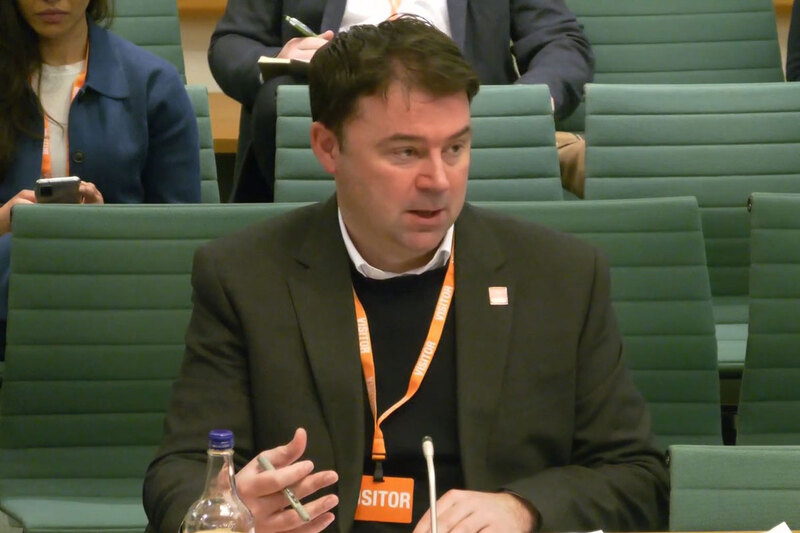
During an evidence session with the Housing, Communities and Local Government (HCLG) Committee yesterday, charities and councils also said temporary accommodation (TA) risks becoming the new social housing, due to lack of supply.
MPs were told that a lack of accurate data on temporary accommodation usage is a barrier to policymaking, which currently relies on anecdotes and individual complaints about conditions.
Housing and homelessness leads at various local authorities told the committee that the temporary accommodation subsidy gap is a key risk, and has become “existential” for councils.
Read More

Matt Downie, chief executive at Crisis, said: “The way I would describe the current state of temporary accommodation is a sort of normalised emergency... when the records are broken, every time the statistics come through – not just for overall temporary accommodation, but for children in temporary accommodation, or any other way you seek to cut data – there appears no way of generating greater political expediency through the statistics, because they’re normalised.”
He also called for temporary accommodation guidance to become statutory, but warned that this would not solve fundamental issues around housing supply.
“The actual underlying issue is that what we’re at risk of talking about is making something that shouldn’t exist anywhere near the scale that it does better, rather than looking at the causes of why that situation is there to start with,” Mr Downie told the committee.
He said the “game of where to put people where there’s no housing is almost a game of whack-a-mole really – if you clamp down on one thing, something else will pop up”.
Dr Laura Neilson, chief executive at the Shared Health Foundation, said that it is becoming “normalised in certain parts of the country that significant proportions of children are spending significant amounts of their childhood in TA”.
“That shock factor when I first started talking about this just doesn’t seem to be there anymore,” she said.
Dr Neilson told the committee that the lack of data has been a “barrier” to making “really good policy decisions and gathering the evidence base”.
She said: “I think we don’t have data about how many times families move. We don’t have data on the kind of facilities they have.
“We rely on individual stories and narratives, and lots of us have done lots of work to collate those, but we don’t have a system for raising awareness of significant accidents or events that happen in TA, so you can’t do any triangulation.”
“I think there’s been a reluctance to see. It’s almost like, if we lift the stone up, what will we really find under it? And I would encourage us to just look and find,” Dr Neilson added.
Last year, several councils confirmed they have changed their reporting system following an Inside Housing investigation into the number of young children living in temporary accommodation.
Christa Maciver, director of campaigns and social change at Justlife Foundation, highlighted the impact of housing supply issues on temporary accommodation.
She told the committee: “We don’t have enough housing, and so that’s where part of the problem is, that I almost feel like temporary accommodation is becoming our new social housing, because we just don’t have enough social housing.”
Stephen Philpott, director of City Housing Solutions & Support Services at Birmingham City Council, raised a similar concern, telling the committee that a risk is “social housing being just for homeless people”.
He warned that this could create a “perverse incentive”, where “if you want a social home, you’re going to have to be homeless”.
“There’s a trajectory with that – we have to guard against that and give people better options earlier on,” he said.
When asked about the government’s plan to end B&B use this parliament, council leaders told the committee that it is achievable but highlighted the pressures on local authorities.
Grace Williams, deputy chair and executive member for housing and regeneration at London Councils, said: “The question is, how are we doing that at the same time as increasing supply, and at the same time [ending] the subsidy gap?
“So the subsidy gap means that for the last 15 years, we only get paid a certain amount for temporary accommodation, which means we can’t discharge our duties as much as we would want to high-quality accommodation without affecting our bottom line and becoming effectively bankrupt.”
Joseph Donohue, strategic lead for homelessness at Greater Manchester Combined Authority, also highlighted the risks around the subsidy gap.
“I think it’s becoming existential for many local authorities, as we’ve seen in recent years up and down the country, and needs immediate attention,” he told the committee.
Sign up to Inside Housing’s Homelessness newsletter
Sign up to Inside Housing’s Homelessness newsletter, a fortnightly round-up of the key news and insight for stories on homelessness and rough sleeping.
Already have an account? Click here to manage your newsletters.
Related stories