You are viewing 1 of your 1 free articles
Extreme heat is the new norm. Are housing management teams ready?
The UK is now in its fifth heatwave of the year, with temperatures set to reach 37°C. As extreme weather becomes the new normal, bringing major health risks for residents, are housing management teams ready to respond? Jenny Messenger reports


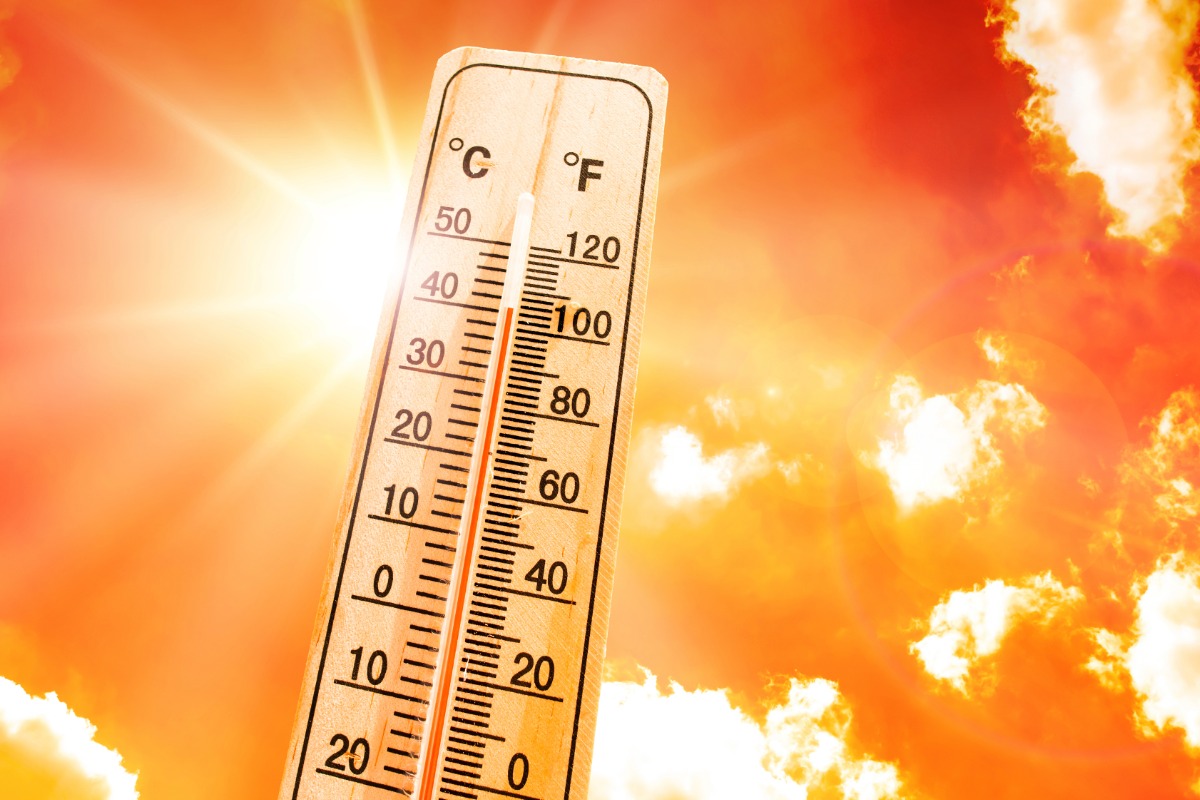 Extreme heat is the new norm. Are housing management teams ready? #UKhousingThe UK is now in its fifth heatwave of the year, with temperatures set to reach 37°C. Are housing management teams ready to respond? #UKhousing
“The social housing sector is on the frontlines of the battle with climate change.” The words of Danielle Hughes, head of the non-profit Sustainability for Housing (SfH), should resonate deeply with housing management staff.
Four UK heatwaves so far this year, with a fifth now underway, have starkly revealed the growing dangers of extreme heat to the nation’s social homes.
Earlier this year, the National Housing Federation (NHF) and the Chartered Institute of Housing (CIH) launched a campaign to raise awareness about overheating, which they describe as an “unfolding public health crisis”.
As well as health risks, high temperatures bring a much greater risk of wildfires. Even as firefighters tackled fires across the country, including a six-week-long blaze at Tintwistle Moor in the Peak District, the CIH rolled out new draft guidance on wildfire risk for the social housing sector.
“Climate change, from the perspective of social housing, is about people, and it’s about helping people who are vulnerable to live healthy, happy, comfortable lives in the face of these massive planetary changes”
These new threats, on top of the more familiar risk of flooding, are already ramping up demands on social housing teams.
As Ms Hughes puts it: “Climate change, from the perspective of social housing, is about people, and it’s about helping people who are vulnerable to live healthy, happy, comfortable lives in the face of these massive planetary changes.”
But as spells of extreme weather become more and more frequent, will housing management teams be able to keep residents “happy, healthy [and] comfortable”?
And what will this mean for housing associations when Awaab’s Law Phase 2 comes into effect in November, making it a statutory duty for them to protect residents from excess heat?
Rising temperatures
Overheating – when the temperature of a home exceeds between 25°C and 27°C – is now a pressing problem for homes across the UK.
According to a 2022 Arup report commissioned by the Climate Change Committee, half of all UK homes are currently at risk of overheating, a figure that is set to rise to 90% by 2050.
For many, that risk is already a reality; in 2024, the English Housing Survey found that 419,000 social rent homes – or 10.6% – were reported for overheating.
Many of the landlords Inside Housing Management spoke to, especially rural organisations, already include wildfires as a risk in their fire policies, while others are planning to in the future.
But the fact remains that soaring temperatures are still a relatively new concept for the UK, says Claire Brown, senior consultant at Turner & Townsend – and this is taking time to sink in.
“We have really good data on who’s vulnerable and what medical conditions they have that might put them at higher risk of struggling in heat, so we proactively go out and contact them”
“While we have seen year-on-year temperatures increasing, there hasn’t necessarily been an acceptance that this is the new normal,” says Ms Brown, who recently completed a PhD in heating and cooling demand in UK social housing.
To be adequately prepared, she says, it’s vital that landlords know who is in their homes, strengthen their resident engagement plans, and understand where people might be more vulnerable to the heat.
“It’s also making sure that we don’t have a blame culture of ‘it’s your fault that the house is overheating’, when it’s fundamentally the fabric of the building,” Ms Brown adds.
Importantly, Phase 2 of Awaab’s Law does not hold landlords responsible for overheating “which is due solely to outside temperatures being particularly high” – rather, it applies where mechanical or other defects are causing dangerous overheating.
Even so, it is likely to bring more scrutiny around managing heat risks.
Ramped-up responses
During the recent June heatwave, red warnings issued by the Met Office and the UK Health Security Agency for parts of the UK triggered a stepped-up response from Maidstone-based Golding Homes.
“We have really good data on who’s vulnerable and what medical conditions they have that might put them at higher risk of struggling in heat,” says Lucy Breeze, sustainability manager at the housing association, “so we proactively go out and contact them.” This included phone calls and visits from staff.
The landlord is currently gathering data on how many of its homes are prone to overheating. Ms Breeze says it’s “really difficult to identify the homes at risk”, partly because there isn’t anything comparable to a flood map for heat.
She says relying on customers to report overheating is also not ideal, because “there are always customers who don’t contact us, and they could be the ones suffering the most”.
Instead, Golding Homes has done a desktop study of its properties, which determined that 14% of homes – predominantly flats – are at higher risk of overheating based on factors including whether they are single-aspect or in an urban centre.
The landlord has now installed environmental sensors in these homes to identify which ones are regularly overheating, and its next step will be developing a programme of work to mitigate this.
Extra costs
Ian Roughley, group head of landlord compliance and building safety at Torus, says the housing association has similarly installed environmental sensors in the homes of vulnerable residents as of last year.
If the landlord receives an email notification reporting a spike in temperature, it sends a staff member out to visit.
In some cases, Torus has found that residents are reluctant to use fans due to noise or concerns about running costs. However, after fixing fans and reassuring tenants that they are relatively cheap to run, the landlord says it has received fewer calls and complaints about overheating this year.
For residents who are especially at risk, Torus has provided portable air-conditioning units or cooling fans, and money towards bills to cover the cost of running them.
Increasing energy bills are a worry, though. “If we do start fitting air conditioning, it’s an all-year cost for heating and cooling,” Mr Roughley says.
Both Torus and Golding Homes say they would consider moving residents temporarily to air-conditioned hotels if nothing else can be done – but they know this is not a viable option for every household at risk of overheating.
“If we do start fitting air conditioning, it’s an all-year cost for heating and cooling”
As Mr Roughley points out: “Whether or not you’ve got access to an air-conditioned hotel depends on where you are in the country, and whether or not there’s room.”
Torus is now planning to assess all its properties to find out which are most at risk of overheating, possibly in partnership with specialist firms that evaluate housing stock using thermal imaging.
Meanwhile, at London-based landlord A2Dominion, interim director of customer and communities Stephen Walker says the recent hot weather didn’t fall within the landlord’s standard disaster recovery and business continuity plans.
“We’ve acknowledged that [this] is a gap that needs to be plugged very quickly,” he says.
When the amber and red alerts were issued, the landlord decided to set its business continuity policies in motion anyway.
Staff contacted vulnerable residents and created cool hubs by installing fans in communal areas. It worked on a case-by-case basis, providing an air-conditioning system for one resident, and moving another out to stay with friends and family, with a payment to cover the cost of the upheaval.
Flood risks
Flooding remains a major threat all year round. NHF data has found that, on average, social housing makes up a quarter of all homes in the 10 worst-affected urban constituencies in England for surface water flooding. This type of flooding can be caused by short summer storms, and can happen miles away from rivers, lakes or the sea.
At ALMO St Leger Homes, created by Doncaster Council in 2005, some residents have recently received water butts that collect water to ease pressure on the drains and reduce this risk.
River flooding has also caused significant damage in the area in recent years. Christine Tolson, head of asset management at St Leger Homes, remembers working late into the night in November 2019, watching the rain as it showed no sign of stopping.
As residents’ gardens got increasingly waterlogged, the calls started coming in, and the River Don got higher and higher.
“Before we knew it, that was it. The Don had burst its banks,” she says.
More than 1,000 homes and businesses were affected by the 2019 flooding in South Yorkshire. A total of 75 St Leger homes were involved, and five families were temporarily rehoused, although most decided to stay in their homes.
Working with Doncaster Council and other local services was critical. “It was a responsive approach to make sure that all households affected had somewhere temporary to live,” says Ms Tolson. “Then we tried to get their homes back into a liveable condition at the earliest opportunity.”
“What you have to have is a robust emergency process in place to make sure residents all get the same quality service”
Many residents didn’t have contents insurance. “If something like this happens, you can lose everything. We push hard to make sure people know that’s a risk,” says Dean Leggott, St Leger’s asset and sustainability service manager.
St Leger offers its own insurance to residents, underwritten by a major insurer, and has done since long before the 2019 flooding.
To make the properties more resilient after the flooding, St Leger carried out a series of repairs, moving residents out for a few days while these were completed. Works included replacing timber floors with concrete ones, raising sockets and consumer units, and installing flood doors and air vent covers.
But the landlord has since had to contend with other, more unusual weather. In 2022, a “mini tornado” tore through Doncaster and ripped the roofs off several St Leger properties. One of its properties was also destroyed by a field fire in July 2022.
After these trying experiences, the ALMO has learned a valuable lesson about how its processes affect residents when extreme weather strikes.
Mr Leggott sums it up: “What you have to have is a robust emergency process in place to make sure residents all get the same quality service.”
Are you subscribed to Inside Housing Management?
Inside Housing Management is the go-to source for learning, information and ideas for housing managers. Not subscribed yet?
Related stories