What housing managers can learn from a C1 landlord
Kelly Deane, director of housing and public protection at Bournemouth, Christchurch and Poole Council, speaks exclusively to Anna Highfield about its C1 grading, what’s still on its improvement agenda and lessons from her 30 years in housing


 Kelly Deane, director of housing and public protection at BCP Council, speaks exclusively to Anna Highfield about Bournemouth, Christchurch and Poole’s C1 grading #UKhousing
Kelly Deane’s 30-year housing career has seen her rise from a homelessness assistant to the director of housing and public protection for 10,000-home landlord Bournemouth, Christchurch and Poole Council (BCP) Council.
Her broad portfolio spans housing and homelessness, public protection, enforcement and regulatory services, including responsibility for BCP’s landlord function. She played a pivotal role in the creation of BCP Council, bringing Bournemouth, Christchurch and Poole together as a unitary authority delivering services for 400,000 residents across south-east Dorset.
Inside Housing Management sits down with Ms Deane to discuss her learnings from local government reorganisation (LGR), how BCP Homes (the council housing service) achieved a C1 grading, and her experience as one of 13 board members at the Association of Directors of Housing (ADoH).
What does the public protection part of your job title entail?
It’s a good question, because people understand what the housing part of my job title means immediately, but public protection is a little bit more mysterious.
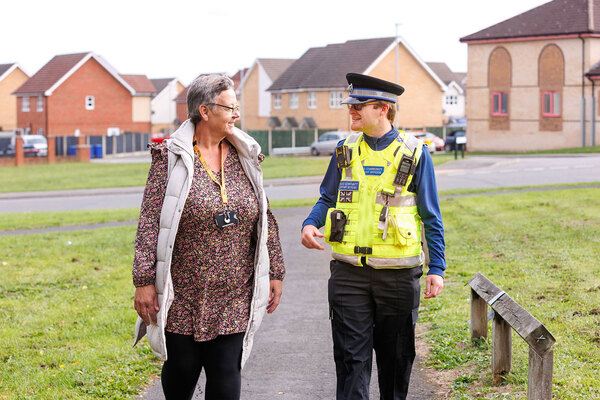
It’s about protecting residents and supporting communities. It includes how we manage the response to anti-social behaviour – not just for our housing stock, but for the whole council. We have community safety accredited officers who have some delegated police powers, so we deal with that, and then things like training standards, environment health, licensing, CCTV. It’s quite a broad role.
What did you learn during LGR, and what did it mean for BCP’s housing management?
We went through LGR seven years ago, in 2019, and the housing management side came slightly later, in 2022. Having just dealt with Covid, suddenly we were in the business of merging two 5,000-home landlords into one operating model [Poole’s stock was managed by an ALMO and Christchurch had transferred its stock years before], knowing that we had the regulatory standards in by then and nobody knew when the inspection would happen. It was challenging, to say the least.
First of all, councils need to know what’s happening [with LGR]. The pause, and the review, is tricky for councils to respond to. What comes next needs to be defined.
Our learning is that [LGR] is very complex and it’s going to take longer than anyone anticipates. We’re four years down the line now, and still aligning new systems. So don’t underestimate the change, and don’t under-resource it. The instability that it potentially creates is a big pressure.
“Before you get carried away with ambitious new-build programmes, make sure you really understand the homes you already own”
Make sure that you bring new systems in quickly and that you hold your Housing Revenue Account (HRA), assets, data – all of your information and your financing – in one place. Those things are your foundations of how you’re going to function as a landlord going forward.
Another thing I would say is, before you get carried away with ambitious new-build programmes, make sure you really understand the homes you already own. We’re now a 10,000-home landlord with around £60m of rental income flowing through the HRA each year. At that scale, the biggest risk isn’t a lack of ambition, it’s making decisions without a clear understanding of your stock condition, future investment needs and long-term costs.
Get your data right, have robust asset management and investment plans, and make sure those assumptions are reflected in a credible 30-year business plan. Once those foundations are in place, you’re in a much stronger position to decide how much new development you can deliver sustainably.
Finally, don’t take savings too soon. We merged two management teams, and that meant we had fewer management costs, and we took those immediately as a saving. What we actually needed to do, and we eventually have done, is to reinvest that in the changes and the improvements that are needed.
BCP Homes was awarded a C1 grading in January, one of just a handful of councils to have achieved this. What was the biggest driver?
[After LGR], our starting point, very deliberately, was absolutely about good, strong governance, clear accountability and making sure that we started with the safety and quality of our stock. So the driver [of the C1] was good data, good assurance and making sure that we had good plans in place, driven by an understanding of our stock.
Of course, resident voice was a big factor. The fact that we started as essentially a new organisation in 2022 gave us an opportunity to reset how we engage with our residents. We created a new advisory board which includes residents, independent experts and councillors – and have they given us a hard time over the past four years!
They have scrutinised us, challenged us and really driven a lot of our improvements. Honestly, we wouldn’t have our C1 without them.
“If [our inspection] had happened six months earlier, we probably would have been a C2”
We hoped that we would get a C1. We didn’t expect it. If [our inspection] had happened six months earlier, we probably would have been a C2, because we’re on an improvement journey.
And while we’ve celebrated the C1 a lot, because it’s something to be proud of, we do have to remember that C1 just means we’re compliant. It’s not like getting an outstanding rating from Ofsted, it’s just that you’re getting the basics right.
So, we’ve got a really good solid foundation, [and now we’re asking] how can we really progress and mature our landlord service in a way that is much more locally informed, as opposed to being preoccupied with the standards?
What’s on BCP’s improvement agenda for the next 12 months?
We know that we do a really good job on compliance in terms of the safety and quality of our properties. Our data is good, and we’ve got good assurance there.
The real work, going forward, is how we tackle anti-social behaviour, because these are our poorest-performing tenant satisfaction measures. And how do we embed resident engagement in an even more meaningful way than we do already?
I’d like to take more of a community development-type approach [to resident engagement], working not just as BCP Homes, but with other landlords in the area, and voluntary, community and resident groups. When everyone comes together, there’s huge power in that, and I’ve seen it many, many times.
I also want to mention homelessness. We have sustained [a track record of] no families in bed and breakfasts for more than six weeks for nearly two years in BCP. That’s a unique position in the country, but it’s very volatile, so maintaining that is our absolute priority.
Local authorities are at the sharp end [of homelessness and other core needs], and it’s important that we think about how we can successfully sustain tenancies and build strong communities around some very complex demands.
ADoH was launched earlier this year with an aim to become ‘the leading professional voice’ for local authorities in England on housing and homelessness. Is it already having that impact?
It is crazy to me that we are only six months old. In that first six months, we’ve achieved over 100 members and held numerous different events that brought leaders together.
Even if I wasn’t on the board, I would be finding it incredibly valuable as a member, because there’s so much change and so much challenge in our sector right now. The role of a director of housing is probably more challenging than it ever has been.
So to have your peers around you and to be able to have that space to explore what good looks like, what support we can provide to each other and as a professional body of directors, and how we can influence at a national level, are really exciting.
It was long overdue, and another three years down the line it will have matured greatly.
What are the most important lessons you’ve learned in your 30 years in the sector?
Stay true to why you came into the sector. I chose housing as a career when I was at college; homelessness was where I wanted to be focused.
These are tough jobs, and the pressure can be really intense. So holding your sense of purpose is important, in terms of your energy, your commitment and the authenticity that you bring as a leader.
“Stay close to the purpose. Don’t lead in isolation. Really appreciate your teams and support them”
Another big lesson for me is not to lead in isolation. Reaching out, networking, talking to other councils, looking for practical solutions, the testing of what’s worked well, where, and how that goes across other areas, are really important.
And it’s really important to empower and trust your teams. I’ve got 460 people who work for me. I’m blessed with their talents and with their commitment, and it’s the thing that keeps me in the job in the long term. I hope I lead them in a way that means they can be ambitious and can continue to achieve.
So, stay close to the purpose. Don’t lead in isolation. Really appreciate your teams and support them, because some of the stuff we do collectively is magic, genuinely.
Sign up to Inside Housing Management’s weekly newsletter
Inside Housing Management is the go-to source for learning, information and ideas for housing managers.
Already have an account? Click here to manage your newsletters.
Related stories