You are viewing 1 of your 1 free articles
Landlord warns cost of inaccessible homes could run to nearly £15bn
A specialist landlord has warned that the cost of inaccessible homes could be as much as £15bn, following a survey.


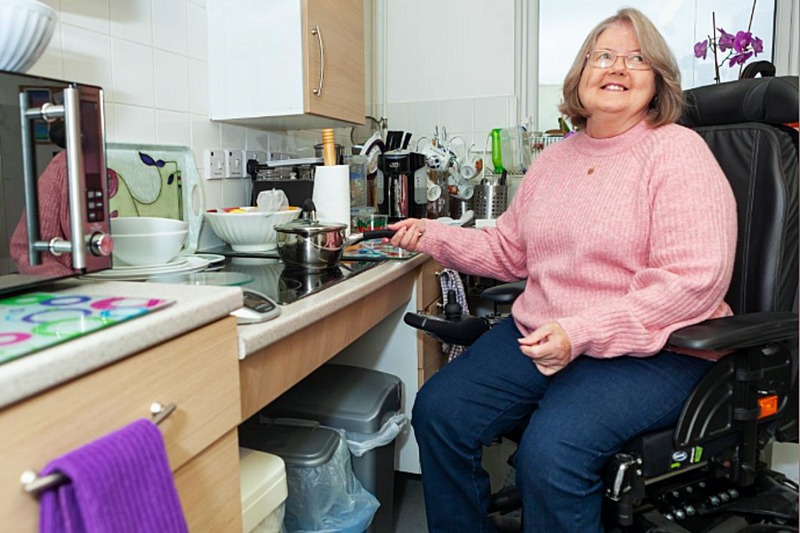 A specialist landlord has warned that the cost of inaccessible homes could be as much as £15bn, following a survey #UKhousing
The findings by Habinteg, a housing association that specialises in accessible housing, showed that one in five UK adults report they or a family member experienced outcomes such as delayed hospital discharge or a move into residential care because a home could not meet their accessibility needs.
Using data from the survey that explored public attitudes to accessible and adaptable housing, Habinteg estimates that the cost to the NHS for delayed hospital discharges due to inaccessible homes could run to over £3.9bn.
For the same reason, moves to residential care could cost more than £11bn if each lasted just four weeks, meaning the total could be nearly £15bn.
Read More

A 2025 report from the National Housing Federation showed that a lack of supported housing was responsible for a fifth of all delayed discharges and nearly three-quarters of all housing-related delayed discharges from mental health hospitals.
In The adaptability gap: Public perceptions of UK homes in 2026, Habinteg found that 21% UK adults (people aged 16 to 79) said they or a family member had experienced these outcomes.
Almost a third of this group worry always or often about the suitability of their home or that of a loved one. One in five unpaid carers said they worry often or always.
Among those aged between 55 and 64, 28% said they were confident that their current home would allow independent living at age 80 without adaptations.
Mike Nevin, a member of Habinteg’s insight group, experienced a delayed discharge from hospital following a major health incident where he lost the use of his legs, lower body and, for a time, his upper body. The incident led his occupational therapist to declare him technically homeless.
He said: “I remember a feeling of hopelessness overwhelmed me about my housing situation; all I wanted to do was to go home. If I had stayed in hospital any longer, I’d have spiralled downwards.
“To get me out of hospital and back into my original home while I searched for a new, more suitable home, a friend constructed a temporary ramp. Without it, the house would have been inaccessible to me.
“Unable to find a suitable home in the South West, we eventually had to leave Somerset, for a new-build house with level access and wide halls in the North East in Durham.”
People who provide unpaid care for adults or children are almost twice as likely to have faced situations such as delayed discharge from hospital or having to move into residential care.
Among carers, 11% had their own return home from hospital delayed and 10% moved into residential care, while 16% saw a family member’s discharge delayed and 19% experienced a family member move into care.
Helen Walker, chief executive of charity Carers UK, said: “For many carers, housing isn’t simply about having a roof over their head. They are often caring for someone with longstanding or changing accessibility needs, with varying support available to make their home safe, accessible and suitable for the care they provide.
“At the same time, many unpaid carers are living on very low incomes and cannot afford the costs of adaptations, repairs and improvements.”
Cost is one of the top-three concerns, followed by whether their home can be adapted at all. Of those who rent, 38% said getting permission from a landlord or housing provider to adapt a home would also be a top-three concern.
When choosing a home, 17% said accessibility and adaptability had been a high or top priority when choosing their last home; 25% said it will be for their next move. People who often or always worry about the accessibility of their home or that of a loved one are over four times more likely to make it a priority in their next move.
The survey found that 52% of UK adults support a requirement for all new homes to be accessible and adaptable.
Martin Warhurst, chief executive of Habinteg, said: “Our estimates show that the lack of accessible and adaptable housing could be costing billions of pounds for the public purse in health and social care.
“Government needs to face up to this and should take note of the substantial public support for a national policy to ensure all new homes are built to the accessible and adaptable standard.
“Currently, the National Planning Policy Framework only requires a minimum of just 40% of new homes to be built to the standard and there is no obligation on local planning authorities to include a target for homes that are fully wheelchair accessible.”
Known as M4(2) in the Building Regulations, the proposal will not have a positive impact, as there is no obligation for local plans to set individual targets or to meet the higher M4(3) standard for wheelchair users, Habinteg previously warned.
Mr Warhurst added: “The lack of accessible homes causes real harm and hardship to countless households, as well as driving costs to public services.
“If we are to learn from the experiences of people like Mike Nevin, we must recognise that accessible homes are essential to social care reform, because they protect people’s independence and ease the strain on our systems.
“We must listen to and use their experiences and insight to progress a preventive housing strategy that commits to building the accessible and adaptable homes that we are all likely to need.”
Sign up to Inside Housing’s Care and Support newsletter
Sign up to Inside Housing’s Care and Support newsletter, a fortnightly bulletin featuring care and support news and analysis.
Already have an account? Click here to manage your newsletters.
Related stories