You are viewing 1 of your 1 free articles
Life in temporary accommodation ‘comparable to torture’ for neurodivergent children, report finds
Neurodivergent children in temporary accommodation across the UK are living in conditions comparable to a “form of torture”, a new report has found.


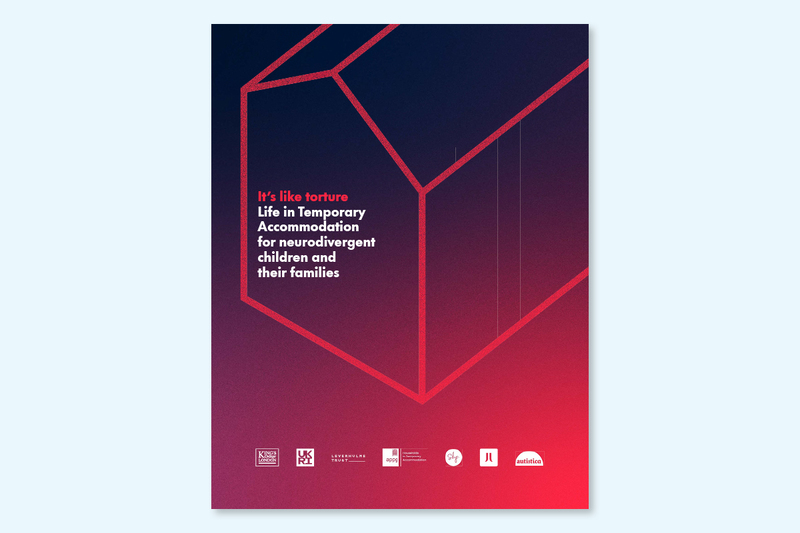 Neurodivergent children in temporary accommodation across the UK are living in conditions comparable to a “form of torture”, a new report has found #UKhousing
Every aspect of homelessness provides a new challenge for neurodivergent children, from instability to sensory overload in cramped flats, according to the study from King’s College London (KCL).
Undertaken through the All-Party Parliamentary Group (APPG) for Households in Temporary Accommodation, the report, titled It’s like torture: Life in Temporary Accommodation for Neurodivergent Children and their Families, said neurodivergent children with autism, ADHD, dyslexia and sensory processing disorders commonly rely on “routine, predictability and safe environments to thrive”.
Yet the instability, overcrowding and poor conditions in temporary accommodation strip away these foundations, creating a situation that is harmful to children’s health, education, and overall well-being.
The study compares this experience to a “form of torture”, alongside the sleep and sensory deprivation highlighted as common occurrences for neurodivergent children in unsuitable accommodation.

When in temporary accommodation, families can suddenly be relocated with little notice, removing support systems that have been built up and placing children in a “psychologically excruciating” state of emotional deprivation, researchers found.
Meanwhile hostels, B&Bs and emergency accommodations are often noisy, overcrowded, brightly lit, unpredictable and shared with strangers. “To a child whose nervous system reacts more intensely and more painfully, this can amount to unrelenting sensory assault,” the report said.
The report, produced with support from the Shared Health Foundation, Justlife and Autistica, highlights findings from a UK-wide call for evidence which attracted responses from 280 families across the UK.
It comes after an investigation by Inside Housing that involved visiting families in temporary accommodation to hear about the struggles of living in cramped flats, hotels or out-of-area placements with neurodivergent children.
Among the families was Rachel Walker* and her 11-year-old daughter Daisy*, who has autism and ADHD. The pair were placed in a Travelodge in Greater Manchester last year, having fled domestic abuse.
Ms Walker said the worst part was the space: the room was around 10 feet wide, with just two single beds. “It was like living in a kennel,” Ms Walker said.
This latest KCL report describes the issue as a “significant policy blind spot”. There is no official data on how many neurodivergent children live in temporary accommodation, but researchers estimate that between 25,000 and 120,000 neurodivergent children may be affected.
Siobhain McDonagh, chair of the APPG for Households in Temporary Accommodation, said: “We should all be appalled that children are being forced to endure conditions that are comparable to torture.
“No child should ever be subjected to such trauma, yet this is the reality for too many who are experiencing homelessness. These conditions are not only degrading and inhumane, but risk inflicting lifelong harm on children’s physical and mental health. It is time to take firm control of this crisis and act with the urgency it demands.”
Katherine Brickell, professor of urban studies at KCL and report co-author, said: “Temporary accommodation may fulfil a legal duty to house families, but it is repeatedly failing to meet even the most basic conditions required for neurodivergent children.
“For many children, these placements are overcrowded, noisy, unstable and wholly unsuitable for their sensory, emotional and developmental needs. What is intended to be a short-term solution too often becomes a source of lasting trauma.”
The report recommendations incorporating the UN Convention on the Rights of the Child into UK law, which would ensure policymakers factor in children’s rights when making decisions on housing and homelessness.
It also calls for rules banning visitors to be changed in order to allow respite and support for parents of neurodivergent children, and recommends that families with neurodivergent children should not be placed in mixed accommodation with shared facilities.
It comes as Impact on Urban Health, a health inequality non-profit organisation, last week published a report on best practice for local authorities and other services.
The report was co-created with 30 families with neurodivergent children living in temporary and insecure housing in south London.
*Names changed to maintain anonymity
Sign up to Inside Housing’s Homelessness newsletter
Sign up to Inside Housing’s Homelessness newsletter, a fortnightly round-up of the key news and insight for stories on homelessness and rough sleeping.
Click here to register and receive the Homelessness newsletter straight to your inbox.
And subscribe to Inside Housing by clicking here.
Already have an account? Click here to manage your newsletters.
Related stories