You are viewing 1 of your 1 free articles
The strategy behind our sector-leading 91% TSM score
Ashton Pioneer Homes is a small housing association, but feedback from tenants is core to our approach on building safety and communication, says chief executive Peter Marland


 Ashton Pioneer Homes is a small housing association, but feedback from tenants is core to our approach on building safety and communication, says chief executive Peter Marland #UKhousing
When tenant satisfaction measures (TSMs) were announced, many social landlords felt trepidation at what the findings would reveal.
As Ashton Pioneer Homes has fewer than 1,000 homes, we are not legally required to carry out the survey annually, but feedback from our tenants is like gold dust, so we voluntarily choose to.
Everyone connected with the organisation should feel immensely proud of our overall satisfaction score of 91%, which is thought to be the highest in the country. This is particularly meaningful, given that the majority of our tenants live in 1960s high-rise blocks.
This is where so much of our strategic thinking originates. Our long-term approach prioritises tenant safety and the subtle, but vitally important, distinction of tenants actually feeling safe.
Read More


Our tenants, like those across the country, were understandably concerned after the Grenfell Tower fire, especially as we were rendering a block at the time.
We were already committed to providing the best safety possible, but really upped the ante on face-to-face tenant communications. A lot of open public meetings were held where we invited fire and building safety experts and architects to explain, answer questions and reassure people.
We also appointed the best fire safety and structural consultants in the country to work with our compliance and repairs teams, which resulted in us receiving Building Assessment Certificates (which show that a higher-risk residential building meets safety standards under the Building Safety Act 2022) for all seven of our high-rise blocks.
“Actions speak louder than words, and there are no quick fixes with tenant satisfaction; it is built on long-term delivery”
For context, in mid-2026, the Building Safety Regulator had only accredited a third of applications.
By being highly visible and approachable, we know the quality of a tenancy is about more than the building itself; people value feeling safe, being listened to and knowing someone will respond when they need help.
Actions speak louder than words, and there are no quick fixes with tenant satisfaction; it is built on long-term delivery.
Our strategy dates back to our stock transfer in 1999 – 30% of properties were empty, there was no demand and most tenants wanted to leave. Dissatisfaction and anti-social behaviour (ASB) levels were very high. We made a commitment to tackle ASB and created a dedicated community safety and prevention team.
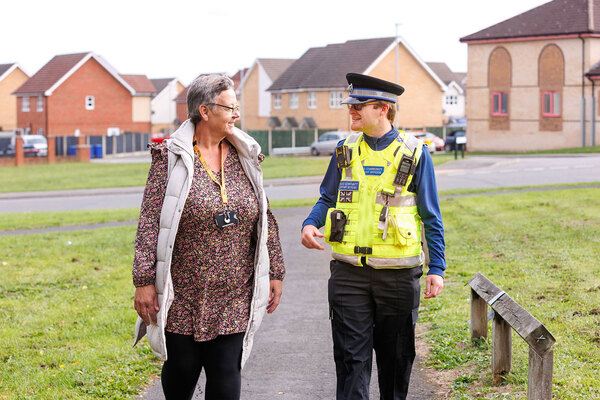
Now comprising 10 members, all received training so they hold the Security Industry Authority licence and can administer first-aid, including CPR.
As well as managing low-level ASB and monitoring a state-of-the-art CCTV system, the team has a strong community presence patrolling estates and is viewed by tenants as another emergency service. Operating 24/7, it gives tenants comfort that we are always available for them. Our team regularly goes out at all hours and has saved several lives over the years.
We also encourage a common-sense, personal approach. If visiting an 80-year-old tenant and a light bulb needs changing, the team will do it there and then. This plays a part in 93% of customers being pleased with the speed of our repairs.
“Accreditations are important, particularly in technical roles. However, many of the skills needed to do a job well can be taught and developed”
ASB has been reduced significantly, and so, too, our legal costs. We are also generating income from the service by extending it to other organisations, including the local primary care trust. The knock-on effect of our human touch means tenants tell us they really like living in our properties, with 89% of those surveyed saying they felt safe.
Now only 1% of our stock is empty, rent collection levels are 100.3% and over 500 people are waiting to move in.
Undoubtedly, our people are key to the high satisfaction levels. We have a culture-first approach to recruitment, based on values and personality before qualifications.
Accreditations are important, particularly in technical roles. However, many of the skills needed to do a job well can be taught and developed. We look for people whose values and personal moral compass align with our ‘heart’ values: acting with integrity, treating others with respect and caring about the communities we serve.
These principles shape the decisions colleagues make every day and how they respond when residents need their help. TSMs provide evidence this is working, with 95% of tenants saying we treat them fairly and with respect.
Everyone mucks in. Frontline colleagues help people with complex social and personal challenges, particularly where stretched resources mean support from other agencies is difficult to access. That is why our communities need people who believe in the purpose of social housing and are committed to making a difference.
Seeing this first hand every day and regularly hearing our people say working for Ashton Pioneer Homes has a family feel is what makes me most proud. While a 91% score gives us much to celebrate, we have to keep listening, learn from the feedback and make services better still.
An improvement action plan is already in place, which will be directed by our customer committee. For this to work, we have to listen, then act. This builds trust, which is the cornerstone of every good relationship and is ultimately borne out in TSMs.
Peter Marland, chief executive, Ashton Pioneer Homes
Sign up to Inside Housing’s Daily News bulletin
Sign up to Inside Housing’s Daily News bulletin, featuring the latest social housing news delivered to your inbox.
Already have an account? Click here to manage your newsletters.
Related stories