You are viewing 1 of your 1 free articles
Domestic abuse and homelessness: how can support services help break the cycle?
Domestic abuse is a leading cause of homelessness in the UK. Amy Smith, Elise Whittaker and Holly Ringrose, from the Domestic Abuse Housing Alliance (DAHA), explain how service providers can overhaul their systems to help tackle the problem


 Domestic abuse is a leading cause of homelessness in the UK. The Domestic Abuse Housing Alliance explains how service providers can overhaul their systems to help tackle the problem #UKhousing
Learning outcomes
- Understand the link between domestic abuse and homelessness, and how it disproportionately impacts women
- Learn what is meant by ‘multiple disadvantage’, and how it makes accessing support harder for domestic abuse survivors
- Understand what is meant by a trauma-informed, survivor-centred support system, and how to go about creating one
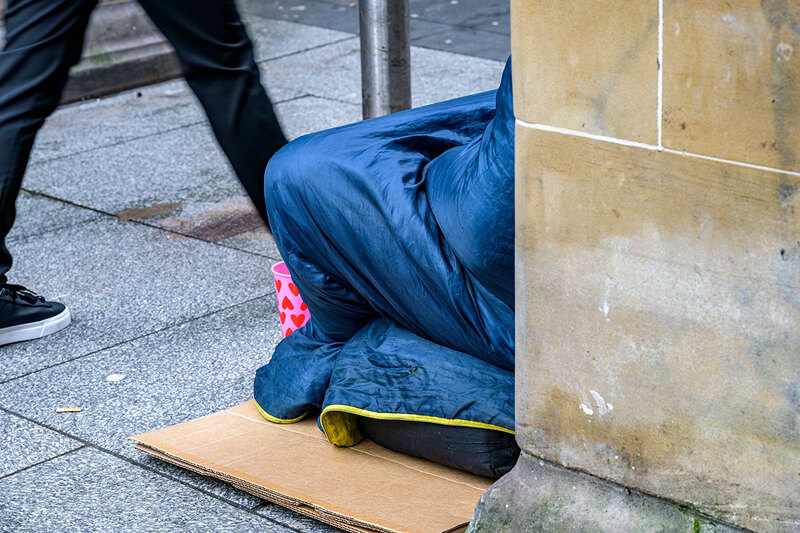
Domestic abuse is one of the leading causes of homelessness in the UK, particularly for women. Many women who are street homeless also face an increased risk of domestic abuse while sleeping rough, in addition to being ‘hidden’ from support services that should be able to help them.
Local authorities, housing providers and supported accommodation services can all help change this trend. But that change will only happen if these organisations adopt a consistent, trauma-informed and survivor-centred* approach at every point of contact with service-users.
*When we say survivors, we are always referring to survivors of domestic abuse, with additional support needs (such as homelessness).
The link between domestic abuse and homelessness
Research shows that domestic abuse is a near-universal experience for homeless women. Women make up 60% of adults in temporary accommodation in England, and a significant proportion cite domestic abuse as a primary cause of their homelessness.
Despite these realities, many homelessness services do not routinely ask their service users about domestic abuse – leaving survivors without recognition or support.
Multiple disadvantage: the compounding effect
Homelessness rarely exists in isolation. Poverty, mental ill health, substance use, interpersonal abuse and systemic discrimination often intersect, creating what is known as multiple disadvantage. Women facing these compounding challenges are more likely to be homeless, and to be overlooked by services.
For some people, immigration status or lack of recourse to public funds policies might present even greater barriers to their safety. Domestic abuse survivors who come from racialised communities may also face additional layers of discrimination, or distrust of services due to past experiences of discrimination.
Meanwhile, disabled survivors can be confronted with inaccessible accommodation options, or a lack of staff training to meet their needs.
These overlapping disadvantages do not just compound the trauma, they actively reduce the routes to safety for survivors.
The support gap
Data from domestic abuse service Women’s Aid found that only 21 refuge bed spaces across three services, out of 4,289 refuge bed spaces nationally, are exclusively for women with substance abuse or mental health support needs. This highlights the gaps in provision for the most marginalised survivors, who are experiencing multiple disadvantage alongside domestic abuse, and an urgent need for services to respond effectively to this cohort.
Trauma-informed, survivor-centred support: why it matters
Trauma-informed care starts by recognising that domestic abuse and homelessness are deeply traumatic experiences.
Survivors experiencing multiple disadvantage are often excluded from traditional domestic abuse and homelessness support models such as refuges or hostels, due to a lack of recognition.
Survivors may distrust services or find certain environments triggering. A truly trauma-informed service doesn’t just acknowledge this, it designs every aspect of its environment and practice to account for it.
A survivor-centred approach goes even further – it prioritises safety, dignity and choice, placing survivors at the heart of all decision-making.
Examples of a survivor-centred approach include: co-producing policies with survivors, offering flexible support plans that adapt to changing needs, and ensuring that every interaction is grounded in respect and empowerment.
Co-production doesn’t always require large-scale consultations or formal structures. It can start with small, everyday actions – inviting survivors to comment on the wording of letters, to shape house rules or to help design welcome packs, for example. These actions send a clear message that their voices are valued and that they have the power to directly influence the services they use.
Holding perpetrators to account
While survivor safety comes first, services cannot overlook perpetrators. Creating accountability begins with challenging abusive behaviour directly and consistently, which makes it clear that abuse and coercion will not be tolerated.
It is important to recognise that couples experiencing domestic abuse are often trauma-bonded. For many, the relationship may not end, and interventions should focus on making the survivor safer within that relationship. There is a common misconception that domestic abuse support is all about forcing separation, when in reality it is about risk minimisation, whatever that looks like for the individual.
How DAHA’s Homelessness and Supported Accommodation Accreditation can help
DAHA’s Homelessness and Supported Accommodation Accreditation provides a practical framework for organisations to embed the solutions discussed in this article, with infrastructure, guidance and specialist expertise.
It can help service providers to identify gaps and flaws in their approach to housing and supporting survivors – as well as perpetrators (see case study, below).
Case study
Case study from the Single Homeless Project, DAHA’s first accredited Homelessness and Supported Accommodation member
Jane, 45, had been in a relationship with her abusive partner for almost 20 years – but the homelessness support system itself was trapping her, reinforcing her disadvantages.
Jane made it clear she wasn’t ready to leave her partner, and would only accept housing if they could stay together, but services only offered separate hostels. Each time, Jane and her partner refused or abandoned the offer, and returned to sleeping rough together.
As Jane described it: “Everything [they offered] was separate [but] my partner didn’t have proper support for years, making me his caregiver and [making] him rely on me more and more.”
Jane desperately wanted a Housing First flat. She would have met the criteria, but professionals decided the risk of her partner abusing her inside a property was too high. The result was years of continued street homelessness. In that time, the couple’s substance use worsened, their health declined and the domestic abuse continued, unseen and unheard on the streets.
Determined to find a better solution, the Single Homeless Project carried out a feasibility study for a couples’ Housing First model, working with researchers and cross-sector specialists, and – most importantly – listening to Jane and other survivors sleeping rough alongside their partners about what they wanted.
The result is a new service designed to manage the risks and complexities of couples sleeping rough together where domestic abuse is present – and where the survivor is clear they won’t accept housing without their partner. Commissioned in Camden, the service is delivered by the Single Homeless Project in partnership with the domestic abuse charity Solace, and with support and consultation from perpetrator management experts at Respect.
Two weeks ago, Jane and her partner moved into separate, concurrently offered one-bedroom flats, each with intensive Housing First support and a network of professionals around them. Jane loves her flat and, for the first time, feels heard. The couple are free to spend time at each other’s homes, and safety measures are in place to help protect her.
Lucy Campbell, assistant director of system change and domestic abuse lead at the Single Homeless Project, said the organisation pursued DAHA accreditation with the aim to put “survivor choice, control and safety” at the centre of its services.
She added: “The DAHA standards quickly revealed a gap in our approach – how we house and support perpetrators. Without housing and tailored support, there is little chance perpetrators of domestic abuse – especially those facing their own challenges – will engage in meaningful behaviour change.”
Ms Campbell said DAHA accreditation has “pushed us to reconsider what real choice and control for survivors means, and to let survivors tell us how our services should be delivered”.
Embedding an organisational approach to domestic abuse
The link between domestic abuse and homelessness is undeniable, but solvable.
For service providers, every policy, tenancy decision and point of contact is a chance to break the cycle of abuse and homelessness.
That means embedding domestic abuse, multiple disadvantage awareness and trauma-informed practice at every level, ensuring no survivor slips through the gaps because one agency didn’t see the full picture.
Find out more about DAHA accreditation here.
Subscribe to Inside Housing Management and sign up to the newsletter

Inside Housing Management is the go-to source for learning, information and ideas for housing managers.
Subscribe here to read the articles.
Already have an account? Click here to manage your newsletters.
Related stories