MPs call for Housing First to be expanded and emergency meeting on temporary accommodation
MPs have called for Housing First to be expanded across the country and for an emergency meeting between councils and housing associations on temporary accommodation amid spiralling costs.


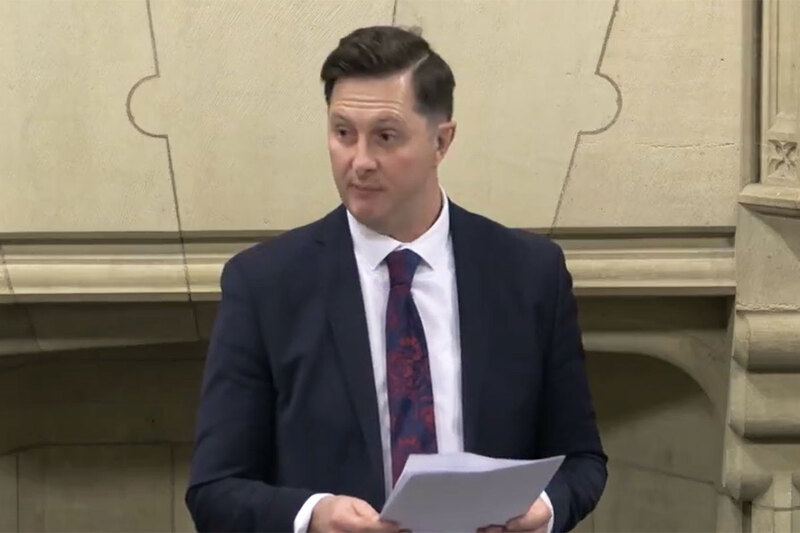 MPs have called for Housing First to be expanded across the country and for an emergency meeting between councils and housing associations on temporary accommodation #UKhousing
Labour backbenchers urged the government to roll out the homelessness prevention model nationally after success in local pilots during a Westminster Hall debate on funding to support people experiencing homelessness.
Other MPs from the group highlighted issues with the cost of temporary accommodation, including the “ludicrous situation” of councils competing with each other to procure housing.
It comes after the number of children in England living in temporary accommodation reached record levels this year, while more than 130,000 households were stranded in this type of housing as of July.
Soaring levels of need have also impacted council finances, with local authorities across the country spending a combined £2.8bn on temporary accommodation last year.
MPs put forward potential solutions to the problems at the session in the House of Commons yesterday. Lee Pitcher, MP for Doncaster East and the Isle of Axholme, highlighted statistics showing around one in three rough sleepers across the country have slept rough before.
Mr Pitcher, who shared his own experiences with homelessness as a child, said the system is “managing crisis” rather than resolving it and “pour[s] billions into temporary fixes”.
He claimed that Housing First, an approach to ending homelessness through providing immediate housing and open-ended support to rough sleepers, could help break the cycle, citing evidence of success in sustained tenancies from pilots of the model in Greater Manchester, the Liverpool City Region and the West Midlands.
Mr Pitcher called on ministers to commit to a national Housing First strategy with clear tenancy targets, which would make this offer the default for people who are repeatedly experiencing homelessness or have more complex needs.
He also said a share of the government’s promised new affordable homes should be reserved for Housing First tenancies, and the model should be rolled out first in areas with high levels of repeat homelessness.
His support for Housing First was echoed by Patrick Hurley, MP for Southport, who told the chamber that the model provides good value for money and works for those who have been “systematically failed” by traditional models of accommodation.
He added: “If we are serious about combatting homelessness, in particular rough sleeping, we should protect and expand Housing First.
“That requires long-term, ring-fenced funding, and a national commitment to scaling provision and to ensuring that it is embedded in the wider homelessness strategy for government.”
Rachel Blake, MP for the Cities of London and Westminster, highlighted the impact of the housing crisis in the capital, where more than half of England’s homeless households in temporary accommodation live.
For London boroughs, the temporary housing bill can add up to £5m per day and for taxpayers the cost averages £202 per year, around 11% of their overall tax bill.
This led Ms Blake to ask the minister for homelessness, Alison McGovern, if she would “bring local government and housing associations together for an emergency meeting”.
This meeting would be “to have a frank conversation about the ludicrous situation of local authorities driving up the cost of temporary accommodation because they are competing with each other to actually procure temporary accommodation”.
The London MP also asked for an update on the Office for Value for Money report on the cost of temporary accommodation, and if Ms McGovern would consider funding models to help people move from leased temporary accommodation to permanent housing.
In response, Ms McGovern said she is “determined” that the government will publish its long-awaited homelessness strategy before Christmas, and urged members to engage with a value for money review of temporary accommodation to help provide an evidence base.
She reminded MPs that the government review will include how to provide good-quality temporary accommodation and supported housing through greater co-ordination, planning and procurement.
The minister also acknowledged the tensions councils face between ring-fencing funding and having the freedom to spend cash on tailored support for their local area.
“I think the way that we will square that circle is through the local outcomes framework, which we will publish shortly with the full settlement, where we will show how we will have visibility and transparency over outcomes so that we can understand exactly where the problems are and take steps to tackle them,” she said.
The minister, who took on her role following a reshuffle this autumn, claimed to have seen early signs of progress, with 11% fewer households now in B&B accommodation.
However, she added: “I would agree with all members who have expressed real concern with where we are on this subject. At the moment, we still have a long way to go.”
In its response to the Fair Funding Review 2.0 consultation, the government recently promised to allocate funding to councils based on “true local need”.
At the time, it also confirmed that at the provisional local government finance settlement in December, proposals for the 2026-27 settlement will be subject to consultation followed by a debate and vote in the House of Commons.
Sign up to Inside Housing’s Homelessness newsletter
Sign up to Inside Housing’s Homelessness newsletter, a fortnightly round-up of the key news and insight for stories on homelessness and rough sleeping.
Click here to register and receive the Homelessness newsletter straight to your inbox.
And subscribe to Inside Housing by clicking here.
Already have an account? Click here to manage your newsletters.
Latest stories