You are viewing 1 of your 1 free articles
More than 80% of people experiencing homelessness battling multiple health problems, report finds
More than 80% of people experiencing homelessness are dealing with multiple “debilitating” physical health issues, according to new research by the membership body Homeless Link.


 More than 80% of people experiencing homelessness battling multiple health problems, report finds #UKhousing
This research, which drew on data and experiences of more than 700 people, also found that those living in temporary accommodation or sleeping rough were suffering from severe health conditions such as chronic breathing problems, heart problems and cancer.
It revealed that nearly 60% of people experiencing homelessness and ill health received a physical health diagnosis before becoming homeless.
Three-quarters (76%) of people with epilepsy were diagnosed before they become homeless, as were high proportions of people with traumatic brain injury and diabetes.
Read More


Homeless Link, which represents organisations working in homelessness, said this highlights the “uncomfortable truth” that ill health can drive people into homelessness.
“We are missing opportunities to support sick and disabled people early on to alleviate poverty and prevent homelessness and overlooking the health and social care system as a key partner in effective homelessness prevention,” the body said.
The Unhealthy State of Homelessness 2025 report analyses new homeless health needs audits, commissioned by health authorities and councils across the country between 2022 and 2025.
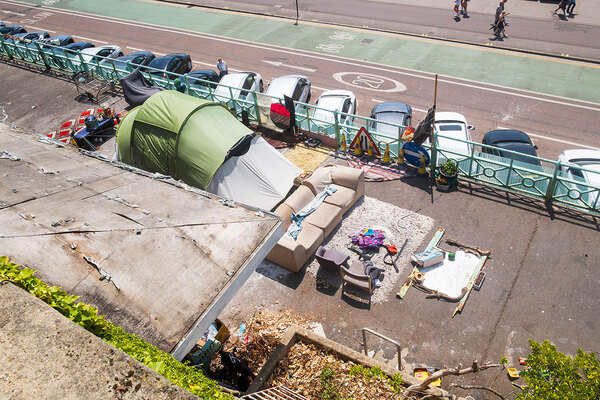
The research also shows how certain types of homelessness make people more ill. Half of people sleeping rough said their health had declined over the past 12 months, compared to 27% who live in supported accommodation.
The report points to progress in health and homelessness in recent years, such as the guidelines published by the National Institute for Health and Care Excellence (NICE) in 2022 on how to deliver integrated health and social care services.
It said this has led to the development of a range of best practice examples, from innovations in rough sleeping data monitoring to infectious disease outreach, while integrated care systems are also working to reduce health inequalities.
However, this comes against a backdrop of a “shocking” increase in homelessness since the measures to end street homelessness during the Covid pandemic were withdrawn, the report said.
Since then, rates of homelessness have soared, with the number of people sleeping rough in England rising to 4,667 in 2024, just 2% below the highest number on record.
Rick Henderson, chief executive of Homeless Link, said: “This new evidence that we are not preventing people who are already unwell from becoming homeless is utterly devastating.
“The research makes clear that homelessness is not only a housing problem, but also a health problem. Failure to invest in the right support to prevent homelessness has catastrophic consequences for thousands of people in our society. They face deteriorating health, unfathomable impact of untreated need, and in the worst cases, early mortality.
“But it doesn’t have to be this way. We can ensure the right support is in place, embedding health and social care into homelessness prevention and providing rapid access to suitable accommodation and person-centred support so that homelessness is short-lived and health outcomes improve significantly.”
Mr Henderson said it is “imperative” that the government commits to an NHS that works better for everyone, and a cross-departmental homelessness strategy that results in real investment and shared accountability to reduce unacceptable health inequalities caused by homelessness.
Dee O’Connell, director of policy and programmes at Pathway, the homelessness and inclusion health charity, said: "
“This report lays bare what we see in our hospital teams every day – the desperate state of health of people facing homelessness, and the failure of services to help them earlier.
“This picture remains largely unchanged since Homeless Link started this research, and on some measures it’s getting worse. This is shocking and depressing, but it is not inevitable.
“Effective, cost-efficient approaches to improve healthcare for people facing homelessness are enshrined in the NICE homelessness guidelines, but exist only in pockets around the country.
“The 10-year health plan offers major opportunities to end this postcode lottery and implement the guidelines on the scale that’s needed.”
Also commenting on the research, Rachel Brennan, director of participation, progression and change at homelessness charity Groundswell, said: “This report reinforces what we have known for far too long – homelessness is not just about housing, it is a profound health issue.
“The evidence once again shows that health issues predate someone becoming homeless, health deteriorates because of being homeless and people experiencing homelessness face deep inequalities when trying to access care.”
Sign up to Inside Housing’s Homelessness newsletter
Sign up to Inside Housing’s Homelessness newsletter, a fortnightly round-up of the key news and insight for stories on homelessness and rough sleeping.
Click here to register and receive the Homelessness newsletter straight to your inbox.
And subscribe to Inside Housing by clicking here.
Already have an account? Click here to manage your newsletters.
Latest stories