You are viewing 1 of your 1 free articles
Awaab’s Law: how is the housing sector finding the new rules?
Anna Clarke, director of policy and public affairs at The Housing Forum, reflects on concerns from members around how to comply with the new regulations


 Anna Clarke, director of policy and public affairs at The Housing Forum, reflects on concerns from members around how to comply with the new regulations #UKhousing
The first phase of Awaab’s Law has now been in force for four months, and I’ve been speaking to our members across the housing sector to find out how they’re getting on.
At The Housing Forum, we recently held a roundtable on the topic, bringing together social landlords, contractors, legal professionals and others across the sector. There’s clearly a lot of concern about how to comply with the new rules, but also some cause for optimism.
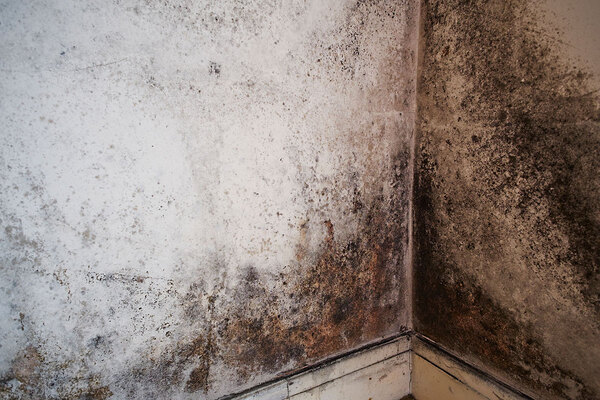
The first phase of Awaab’s Law covers damp and mould. Later phases will extend the regulations to all other Housing Health and Safety Rating System (HHSRS) hazards (excluding overcrowding). The legislation brings in a new requirement to investigate potential emergencies within 24 hours, and also to address the root cause of damp and mould (where structural).
There’s clearly a tension here: a thorough response addressing the root cause of damp and mould is likely to require a different set of actions from an emergency response.
It is clear that the “emergency” nature of damp and mould can be hard to fully grasp – it is, of course, not something that arises suddenly (like a flood, or boiler failure), but something that builds up over many months or years. The legislation is clear, however, that once reported a landlord must treat this as if it was an emergency. Ensuring that all staff and contractors understand this can be tricky.
Read More
 Landlords complying with Awaab’s Law but facing challenges in consistency and capacity, survey finds
Another key challenge is in identifying from phone calls the extent of mould. One landlord has been asking “is it bigger than a pillow?”, but has found that tenants answered “yes” for quite minor mould because it was longer than a pillow (such as under the sealant along the side of a bath), or because they believed that the landlord would only take action if they answered in the affirmative.
This is leading to a large proportion of potential emergency mould cases being downgraded when an operative visits the property. Landlords who are able to speak with tenants via video calls are faring somewhat better here, with fewer in-person visits required.
“Landlords have generally drawn their criteria for vulnerability quite widely – such as anyone in the household being over 65, under 14 or with a relevant health condition. This means most tenants are being classed as vulnerable”
Perhaps the biggest concern with Awaab’s Law is the requirement to triage tenants and meet faster timescales for those who are vulnerable. Training call centre staff to identify these households is likely to be a point of potential failure. As one person told me: “It’s hard enough to get call centre staff to correctly identify which trade to send out on a job – how are they going to accurately identify complex medical or health vulnerabilities?”
Landlords have thus generally drawn their criteria for vulnerability quite widely – such as anyone in the household being over 65, under 14 or with a relevant health condition. This means most tenants are being classed as vulnerable.
A possible solution might be to skip this assessment and simply ensure that all tenants get responses under the faster timelines required, though there appears to be some confusion as to whether this is permitted under the legislation.
While social landlords are very aware of the changing requirements under Awaab’s Law, this knowledge does not appear to have filtered down across the whole of the supply chain as yet. There are still examples of poor construction or maintenance practice causing water penetration into properties. Upskilling contractors to be more proactive about both preventing and identifying damp is clearly an issue.
The issue of damp and mould – while not new in itself – has risen up the political agenda hugely in the last few years. Contracts with maintenance contractors drawn up a few years ago often may not reflect this and are unlikely to reflect the new requirements under Awaab’s Law.
The advice of procurement specialists is to discuss changes in requirements with contractors – there may well be space to renegotiate your priorities without a need to re-tender when a relationship is otherwise going well. Break clauses offer another option if a more formal change of contract is required.
Contractors may also need to change working practices to be able to meet their clients’ needs for a swifter response, where this is legally required. Keeping a wider range of parts in stock may help here.
“The renewed focus on tackling the root cause of damp appears to be the aspect of the new legislation that is proving most effective”
Despite these challenges, those working across the sector do recognise why the new legislation was needed – examples of appalling levels of damp and mould being left unaddressed for years are shocking, and those working for social landlords do recognise them as happening to their own tenants.
The renewed focus on tackling the root cause of damp appears to be the aspect of the new legislation that is proving most effective – landlords report that whereas previously they sent out a team to wash down mould, they now investigate more thoroughly and find a wide variety of different causes, including structural issues.
There’s still much to worry landlords as the new legislation is expanded to cover a wider range of hazards in future, which will inevitably be more costly. As the legislation evolves, the sector will need to continue to share learning. The Housing Forum will be convening that conversation through our cross-sector membership.
Awaab’s Law marks a significant shift in expectations, but it also offers an opportunity to create safer, healthier homes. And if landlords use the opportunity to focus on root causes, there may also be longer-term financial savings – at least one major landlord has seen a fall in the number of complaints around damp and mould since the introduction of Awaab’s Law. That has to be a promising sign.
Anna Clarke, director of policy and public affairs, The Housing Forum
Sign up to Inside Housing’s Regulation and Legal newsletter
Sign up to Inside Housing’s Regulation and Legal newsletter, featuring a weekly bulletin with news and insight on regulation, key legal rulings, legislation and court cases.
Click here to register and receive the Regulation and Legal newsletter straight to your inbox.
And subscribe to Inside Housing by clicking here.
Already have an account? Click here to manage your newsletters.
Related stories